Monday, April 27, 2020

Coronavirus: New York to allow tests in pharmacies
Coronavirus: New York to allow tests in pharmacies

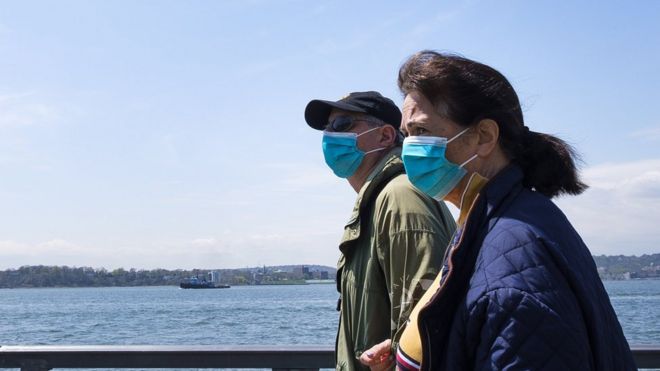
People in masks walk along New York Harbor in New YorImage copyrightEPA
Image captionNew York's governor says the goal is to provide 40,000 tests per day
The US state of New York, the epicentre of the country's Covid-19 outbreak, will allow pharmacies to carry out tests for the virus, the governor says.
Andrew Cuomo said some 5,000 pharmacies would be able to carry out testing, with the aim to provide 40,000 per day.
The US has more than 938,000 confirmed cases. Almost a third of the 53,751 deaths happened in New York City alone.
Meanwhile, President Donald Trump did not hold his daily briefing, saying it was not worth his "time or effort".

What did Trump say?

Speaking on Twitter on Saturday, he blamed the media for asking "nothing but hostile questions". He was heavily criticised after suggesting at Thursday's White House news conference that disinfectant could potentially be used as a treatment for the virus.
His remarks have been condemned as dangerous by doctors and manufacturers, as disinfectants are hazardous substances and can be poisonous if ingested.
In New York City, calls to the hotline for exposure to certain household chemicals more than doubled in the 18 hours after Mr Trump's remarks - 30 cases compared to 13 for the same time frame last year.
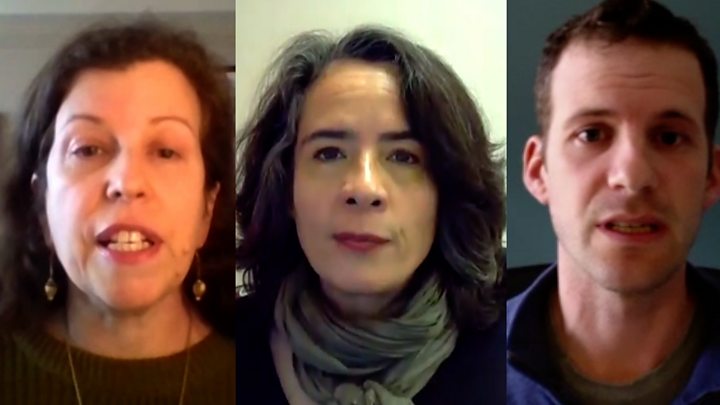
Media captionDoctors dismantle Trump's treatment comments
The briefings with Mr Trump and the coronavirus task force could run for more than two hours. But Thursday's performance caused embarrassment even among some of his supporters, BBC North America correspondent Peter Bowes says.
Mr Trump's tweet appears to confirm reports that the conferences may be coming to an end because polls suggest they have not bolstered the president's popularity among voters, our correspondent adds.
On Friday, the president's briefing was unusually short - lasting just over 20 minutes - and he took no questions from the media.

What measures is New York introducing?

Governor Cuomo announced on Saturday that antibody screenings would be expanded at four hospitals, beginning with frontline medical workers.
He also said independent pharmacies would be allowed to collect samples for diagnostic tests.
It is part of a drive to find out how widely the virus has spread across the state of 20 million people.
"Twenty-one days of hell, and now we are back to where we were 21 days ago," he said. "Testing is what we are compulsively or obsessively focused on now."
Healthcare staff and essential workers - such as police officers, firefighters, bus drivers and shop assistants - would be able to get tests even if they did not have any symptoms of infection, he said.
This was important not just for their own safety but also to protect the public, he said.
"Since we now have more collection sites, more testing capacity, we can open up the eligibility for those tests," Mr Cuomo added.
Hospital admissions in the state have also begun to fall, Mr Cuomo said, in what he described as a sign the crisis was starting to subside. However, the number of deaths announced on Friday increased slightly to 437 - the first time it had risen in four days.
Earlier this week Mr Cuomo said nearly 14% of 3,000 people in a study had tested positive for the presence of antibodies, suggesting the virus had spread widely throughout the population.
Meanwhile New York City's Independent Budget Office said the lockdown would result in the loss of 475,000 jobs and leave the city with a budget deficit of nearly $10bn (£8.1bn).

Banner image reading 'more about coronavirus'
Banner

What are other states doing?

On Friday, Georgia, Oklahoma and Alaska allowed certain businesses to reopen despite warnings from experts and President Trump that the move could be too early and spark another wave of infections.
With unemployment claims reaching 26 million people since mid-March, or around 15% of the country's population, many states are feeling the pressure to ease the coronavirus measures.
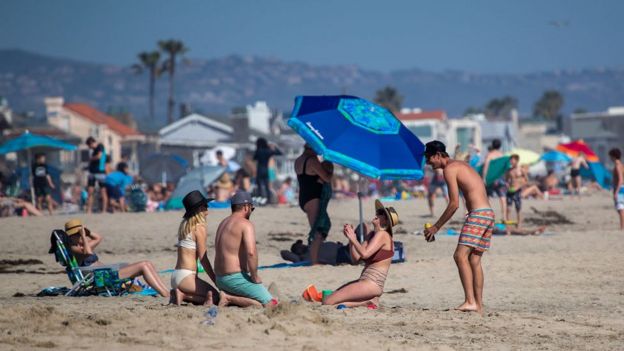
Meanwhile, large numbers of people headed to beaches in Florida and California on Saturday, according to Reuters news agency.
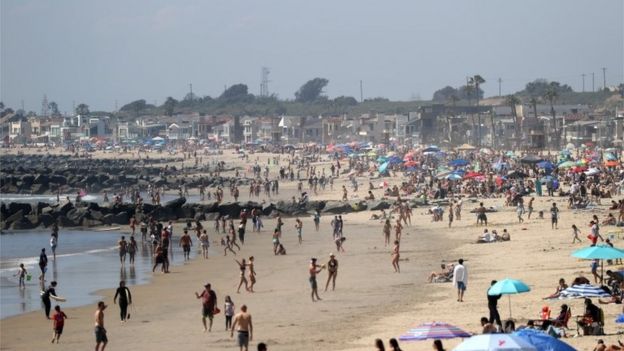
people at newport beach, orange county 25 aprilImage copyrightGETTY IMAGES
Image captionNewport Beach in Orange County, California, was busy on Saturday
Florida's Volusia County, home to Daytona Beach, opened some coastal areas on Saturday to handicapped visitors, part of a phased reopening that has so far limited its beaches to those wanting to walk, surf, bike or swim.
But residents told Reuters that many people were ignoring the rules.
In California, Governor Gavin Newsom urged those who visit the beach to observe social distancing guidelines.

More US states begin lifting virus lockdown ordres

More US states begin lifting virus lockdown ordres

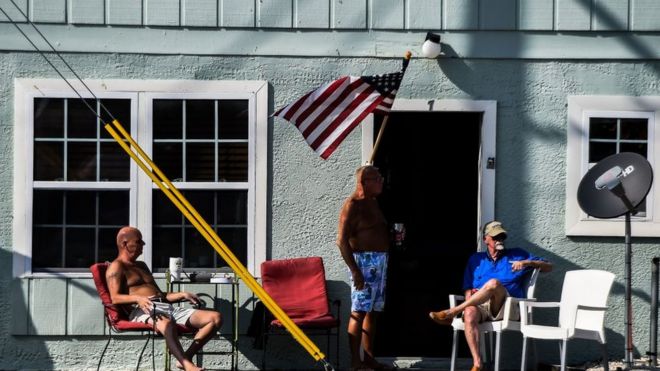
Men sitting outside in GeorgiaImage copyrightGETTY IMAGES
Image captionSome businesses have already been allowed to reopen in several states
More US states are beginning to lift lockdown orders even as US leaders say social distancing guidelines will be necessary throughout the summer.
But governors warn that life will not quickly return to normal, and that restrictions will remain in some places to keep the virus from resurging.
On Friday, the US saw its largest single-day spike in cases.
But the infection rate has dropped significantly in several hotspots, including New York, the US epicentre.
As of Monday, the US has over 965,900 recorded coronavirus cases, according to Johns Hopkins University, and more than 54,800 deaths.
Public health experts warn that lifting restrictions too soon could cause a second wave of infections. The decision to end mandatory orders comes as over 26m Americans seek unemployment protection, and the jobless rate climbs to around 16% of the population.
Even as state governors allow orders to expire, some city mayors have issued their own separate plans to end local lockdowns rules.

How are states reopening?

At one point, over 90% of the US population was under mandatory lockdown orders, but some states began lifting orders over the weekend allowing some Americans to return to hair salons and tattoo parlours.
Georgia, Oklahoma, Alaska and South Carolina have already allowed some businesses to reopen. They and other states have issued plans that call for more rules to be relaxed in the coming week.
Colorado's Democratic Governor Jared Polis has said kerb-side retail pickup can begin on Monday, with hair salons, barbershop and tattoo parlours allowed to reopen on Friday.
Tennessee will allow restaurants to reopen on Monday, the same day that Mississippi's mandatory lockdown order expires.
Montana's governor has allowed churches to reopen starting on Sunday, with social distancing measures still required. Restaurants and schools will be allowed to reopen on 7 May.
Eight states led by Republican governors - Arkansas, Iowa, Nebraska, North Dakota, Oklahoma, South Dakota, Utah and Wyoming - never issued mandatory orders to stay at home.
Michigan's Democratic governor, who has angered protesters with her lockdown orders, told ABC News that it is too early to lift mandatory orders in the state.
Beach-goers in CaliforniaImage copyrightGETTY IMAGES
Image captionBeach-goers at California's Newport Beach on Saturday
"We've got to be nimble and we have to follow the science and be really smart about how we reengage," said Gov Gretchen Whitmer.
Despite a state-wide order to stay-at-home in California, thousands of people have flocked to beaches amid a heat wave.
But officials in both Ventura and Orange Counties, where beaches are open, said most people were adhering to social distancing guidelines, including staying 6ft (2m) apart.
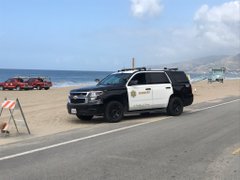
Many beaches are still closed, leading the sheriff of LA County to warn beach-goers that "enforcement is in full effect"
Banner

What have officials said?

On Sunday, White House coronavirus taskforce co-ordinator Dr Deborah Birx said social distancing will remain the norm "through the summer to really ensure that we protect one another as we move through these phases".
Her comments come after Vice-President Mike Pence said the virus would be largely "behind us" by the 25 May Memorial Day holiday, which signals the unofficial start of summertime in the US.
Dr Birx told Fox News this weekend that new cases and deaths "will be dramatically decreased by the end of May".
On Sunday, New York Governor Andrew Cuomo said it would be impractical to force people to remain in their homes all throughout the summer with nothing to do.
"There's a sanity equation here," he says, pointing to reports that domestic violence, drug and alcohol abuse, and mental health problems have already increased.
The death rate has dropped in New York, with 367 deaths on Saturday compared with 437 on Friday. It represents the lowest increase since 30 March.
Governor Cuomo said that transmission rates, as well as death rates, would dictate how and when the state reopens.
He added that some business sectors may be able to consider reopening after his lockdown order expires on 15 May - but only if the region has seen a two-week decline in infections as outlined by recommendations from the US Centers for Disease Control and Prevention.

Coronavirus: Chile to introduce controversial 'virus-free' certificates

Coronavirus: Chile to introduce controversial 'virus-free' certificates

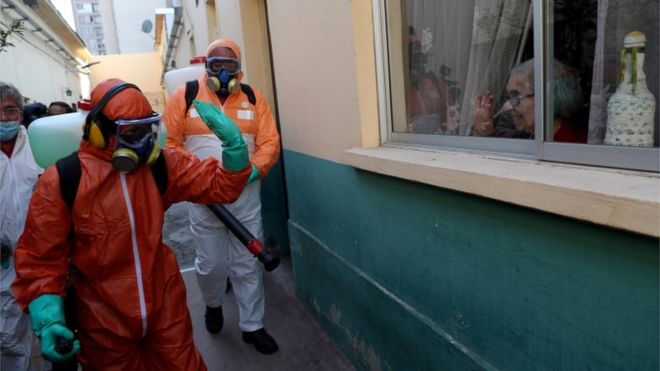
A worker wearing protective gear waves to a woman while using disinfectant to clean outside of a house in Santiago, ChileImage copyrightREUTERS
Image captionChile has confirmed more than 13,000 cases of Covid-19
Chile's government has said it will go ahead with a controversial plan to issue certificates to people who have recovered from Covid-19.
The documents would be given to people to allow them to return to work, Deputy Health Minister Paula Daza said.
The World Health Organization (WHO) has said there is "no evidence" that people who contract coronavirus are immune from being infected again.
It said certificates could inspire false confidence and help it spread.
Chile has reported 189 virus-related deaths and more than 13,000 confirmed cases of coronavirus, according to data from Johns Hopkins University.
"There is currently no evidence that people who have recovered from Covid-19 and have antibodies are protected from a second infection," the WHO said in a briefing note on Friday.
The body argued that so-called "immunity certificates" could even be harmful, because they could lead people to ignore public health advice and therefore increase the risk of transmitting the disease.

questions and answers